Attic mold removal in Huntsville tends to cost $1,500–$5,000. That covers HEPA cleaning of the stained roof plywood, swapping out insulation that soaked up moisture, and the fixes that stop a return: closing ceiling gaps, sending bath fans outdoors, and freeing up soffit vents. The plywood stays on the roof and is cleaned, not replaced.
Leak or condensation, what the job includes, and the steps that really keep mold from coming back.
Reading the stain
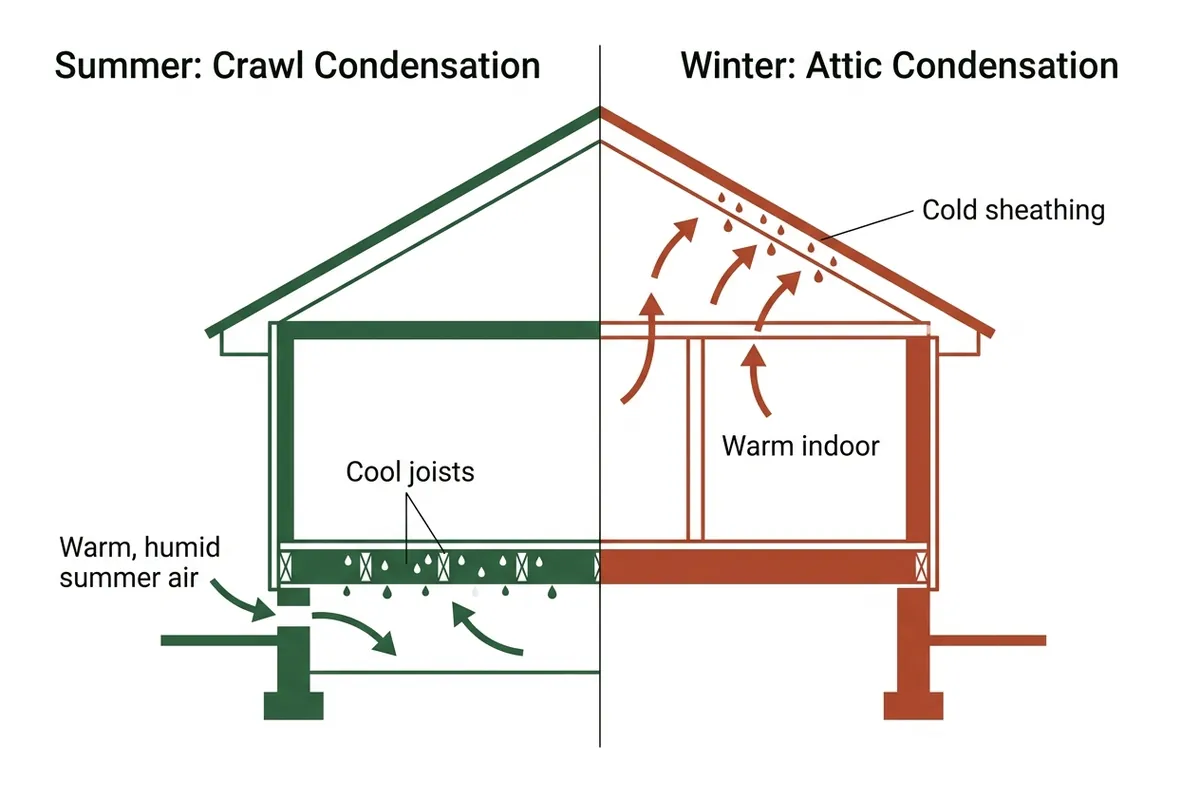
Where the mold sits points to why, even before anyone goes up the ladder. A roof leak leaves a single patch you can follow to a plumbing vent boot, a valley, chimney flashing, or a line of popped nails, often with a rust ring and a streak running downhill. Condensation leaves a wide, even darkening over big stretches of plywood, heaviest on the north slope that stays coldest, and in a Tennessee Valley cold snap you may even see frost on the nail tips. A leak is a roofing repair that brought mold with it. Condensation is a problem of air leaks and venting that shows up as mold, and cleaning will not cure it while damp air keeps rising.
Where the moist air comes from
Damp indoor air drifts up through every gap: can lights, the attic hatch, holes for wiring and pipes, cracks along the tops of walls. In Huntsville houses the usual single cause is a bath fan that ends in the attic instead of venting through the roof or a gable, which sends shower steam straight onto cold plywood twice a day. Close behind are soffit vents smothered when extra insulation was blown in tight to the eaves, cutting off the air that should carry moisture out at the ridge. Both fixes are inexpensive, and both last.
What the job includes
| Step | What happens | Why it matters |
|---|---|---|
| Sealing the attic opening | Plastic and negative air in place before work starts | Spores stay out of the rooms below |
| Judging the insulation | Damp or moldy batts and loose fill get removed | Soggy insulation stops working and traps moisture |
| Plywood cleaning | HEPA vacuuming, careful cleaning, then treatment | Stays in place; only soft wood is swapped |
| Air sealing | Holes in the ceiling, the hatch, and can lights closed up | Blocks damp air where it starts |
| Venting fixes | Bath fans ducted outdoors; soffit vents uncovered | Brings back the airflow the attic was built to have |
What to know if you are buying
Because Redstone and the aerospace employers keep families relocating, many attic questions here come from buyers who have not moved in yet. If a home inspector flagged attic staining and the seller is offering a credit, get the mechanism identified before you accept a number: a $2,000 credit is generous for a bath-fan fix and inadequate for a roof with three failed boots. A good inspection distinguishes them in about an hour, and a written scope is something you can hand to a negotiation.
Attic questions, straight answers
How does mold get into a Huntsville attic?
By two routes that look nothing alike. A roof leak leaves one stain you can trace to an opening such as a vent boot, a valley, or a popped nail. Condensation leaves broad, even darkening across the plywood on the north slope, caused by warm, damp indoor air rising through ceiling gaps and bath fans that empty into the attic rather than outdoors.
What does attic mold removal cost?
Expect $1,500-$5,000 for most attics. Cleaning is the simple part; the price shifts with how much plywood is stained, whether insulation has to come out and go back in, and which repairs the attic needs, such as sealing ceiling holes, rerouting bath fans, or reopening blocked soffit vents.
Can moldy sheathing be cleaned or does the roof come off?
Almost always cleaned. The plywood is treated where it is, with HEPA vacuuming and, when it fits the job, careful abrasive cleaning, and only boards that have gone soft are replaced. A company whose first answer to attic mold is a new roof is in the roofing business, and a second opinion is wise.
Does attic mold affect the air downstairs?
Less than crawl space mold does, because the airflow generally runs upward and out. The bigger risk is what caused it: air leaking from the living space into the attic means your conditioned air is escaping, and the same gaps let attic air back down when pressures shift. Fixing the attic usually improves the energy bill as a side effect.
How long does the job take?
One to two days for most attics. It's hot, dirty, contained work, and it's scheduled early in the day through Alabama summers for the crew's sake. If insulation is being removed and replaced, add a day.
Get a Huntsville mold inspection
Tell us what you’re seeing. A musty smell that gets stronger near the floor, growth on drywall or joists, a crawl space that never dries out, water standing beside the slab after a storm, and we’ll pass it to one independent local specialist who can bring a moisture meter to the places that actually explain it. Buying a house? Say so, and mention your closing date.