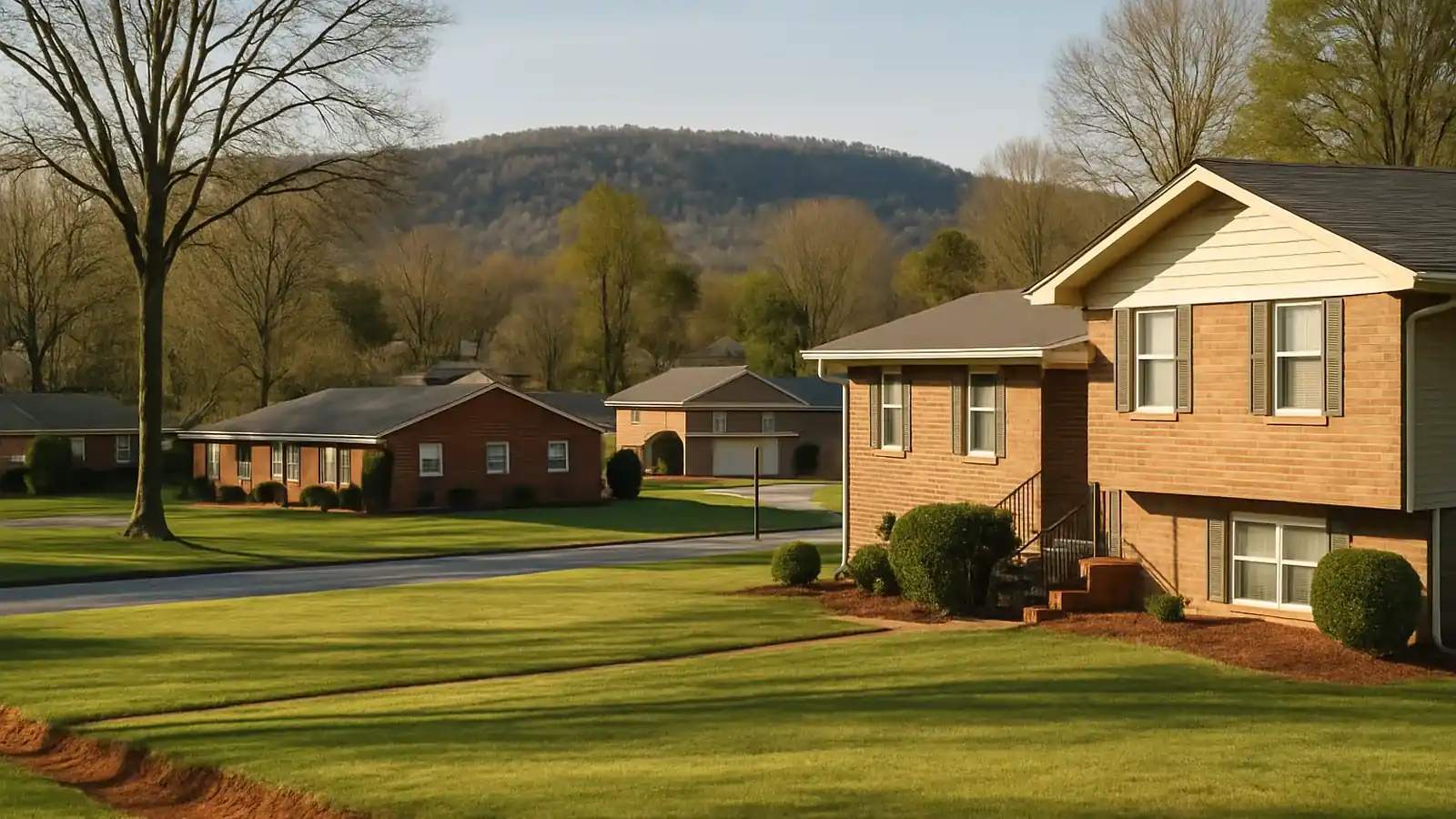
Crawl space mold removal in Huntsville runs $2,500–$9,000, covering remediation of the framing plus what stops recurrence: a sealed vapor barrier over the clay, exterior drainage correction, and a sized dehumidifier where needed. Slow-draining Tennessee Valley subsoil is the reason these spaces stay wet.
Why the ground under Huntsville houses holds water, what it does to framing, and the fix in order.
A saucer, not a sponge
Most people picture soil absorbing rain. Red Tennessee Valley clay behaves closer to a saucer: its subsoil can pass less than an inch of water an hour, so a summer storm dropping two inches in an afternoon leaves most of that water sitting exactly where it fell, including against your foundation wall. From there it enters the crawl space as seepage, as a raised water table, or simply as evaporation off permanently damp ground. Bare dirt in a crawl space is not neutral; it is a continuous humidifier feeding the wood above it.
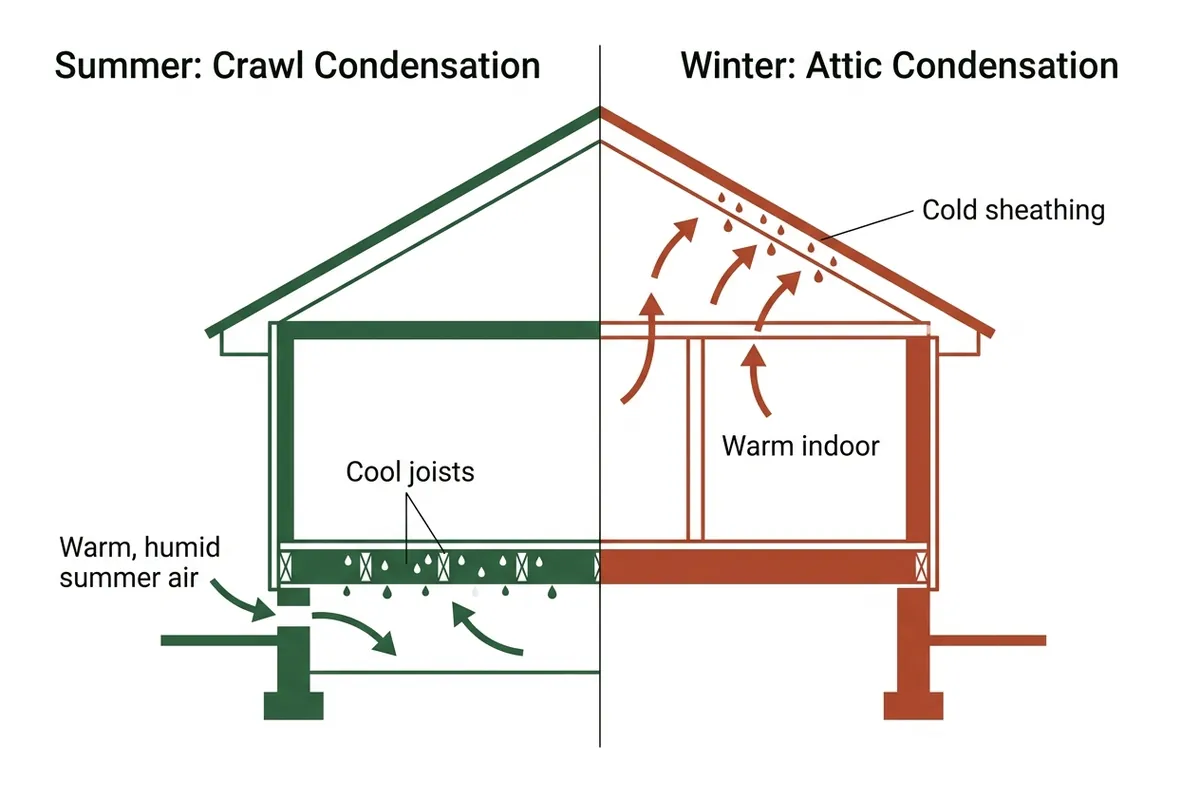
Summer makes it worse in a way that surprises people: opening the vents to "air it out" pulls warm, humid Alabama air into a space where the surfaces are cooler than the dew point. The moisture condenses on joists, ducts, and subfloor. The vents that were supposed to dry the crawl are, for much of the year, delivering the water.
What the wood tells you
| What you may find | What it means | What it takes |
|---|---|---|
| Pale gray or white fuzz on joists | Early growth on wood that stays damp | HEPA cleanup, a liner, humidity control |
| Dark stains on the floor decking | Long-term wetting, often beneath a bathroom or kitchen | Mold removal and a fix for the leak |
| Batts drooping or on the ground | They soaked up water until they fell | Taken out and replaced once it is dry |
| Wood that gives under a screwdriver | Rot fungi: beyond mold and into the structure | Repairs to the framing, not only cleaning |
| Standing water or mud | Exterior water is entering, not just humidity | Drainage correction first, always |
The fix, in the order that holds
Water first, always, and outside before inside. Downspouts get extended well away from the wall, grade gets corrected to fall away for the first ten feet, and where the clay simply won’t cooperate, drainage carries water to a place it can leave. Then the remediation itself: HEPA vacuum and wipe the framing, remove insulation that has absorbed moisture, treat what remains.
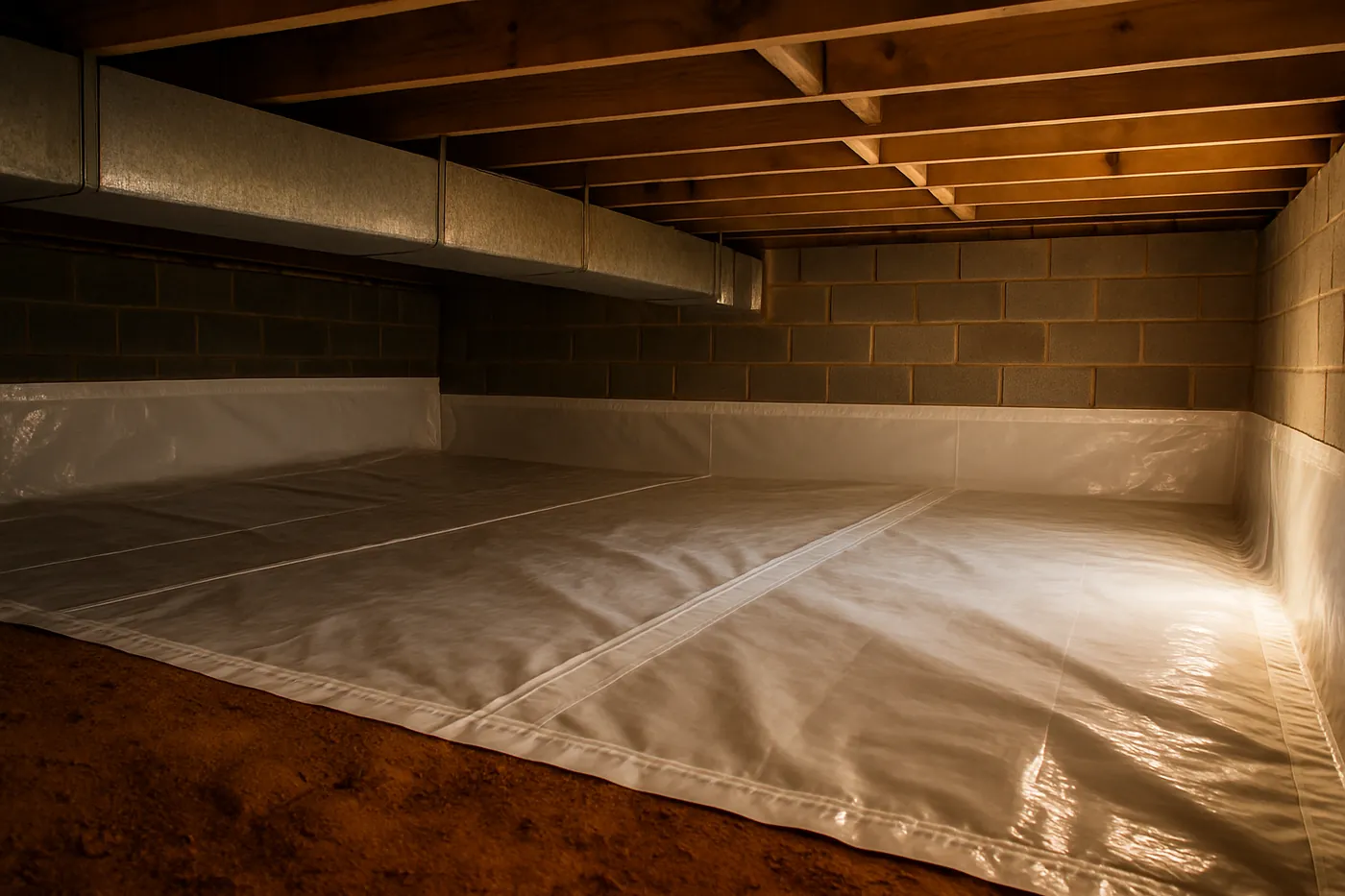
Then the ground gets sealed with a real vapor barrier (overlapped, taped, run up the piers and walls) because unsealed clay will re-humidify a clean crawl in a season. Where the space stays damp regardless, a properly sized dehumidifier holds it under 55% relative humidity. Ducts running through the space should get checked during the same visit; if they’re sweating or contaminated, see remediation for that scope. Every price lands in the cost guide.
Crawl space questions, straight answers
Why do Huntsville crawl spaces stay wet?
Because the clay under them won't take water. Red Tennessee Valley subsoil passes less than an inch an hour, so storm water that should percolate away instead pools at the footing and wicks into the crawl. Add a summer where outdoor air is warmer and wetter than the ground under your house, and every open vent delivers moisture that condenses on cool joists.
What does crawl space mold removal cost here?
Expect $2,500-$9,000 for most crawl spaces around Huntsville. Cleaning the wood is the cheaper half; the total mostly reflects what keeps mold away, meaning a sealed liner over the clay, drainage work outside, and often a dehumidifier sized to the space. Structural repairs to rotted joists price separately.
Is the crawl space really affecting my living space?
Yes, it is, and the reason is simple. As warm air rises and leaves through the top of a house, new air is drawn in at the bottom, so a good part of the air in your rooms passed through the crawl space on its way up. That is why a musty hallway is so often traced to the space under the floor, and why families notice cleaner air after crawl space work more than after any other mold job.
Do I need full encapsulation?
Not always, and a good specialist will say so. A crawl with a working grade outside, a dry footing, and a sound vapor barrier may only need remediation and a barrier repair. Encapsulation earns its cost where the space is chronically wet, where ductwork runs through it, or where the ground stays damp no matter the season - which on this clay is common but not universal.
How do I know if my crawl space is the problem?
Pop the access door and smell; a musty odor at the opening says a great deal. Then look with a flashlight for sweating ducts, drooping or fallen insulation, dark marks on joists, puddles or mud after rain, and rusty metal. One of those is reason to book an inspection, and two or more usually mean equipment will be needed.
Get a Huntsville mold inspection
Tell us what you’re seeing. A musty smell that gets stronger near the floor, growth on drywall or joists, a crawl space that never dries out, water standing beside the slab after a storm, and we’ll pass it to one independent local specialist who can bring a moisture meter to the places that actually explain it. Buying a house? Say so, and mention your closing date.