Mold removal in Huntsville typically costs $1,500–$6,000 per house, or $2,500–$9,000 when the crawl space needs drainage plus a sealed vapor barrier over the red clay. Whoever inspects should climb into the crawl space and the attic both. Because Alabama has no mold license, insist on a written scope that cites IICRC S520.
How Tennessee Valley clay feeds mold, what each job costs in Madison County, and what an honest scope spells out.
The ground under Huntsville doesn’t drain
Most mold explanations start indoors. This one starts about eighteen inches down. Red Tennessee Valley clay is among the slowest-percolating subsoil in the Southeast. It can pass less than one inch of water per hour. Now put 54.3 inches of annual precipitation on it (NOAA/NCEI 1991–2020 normals), a good share arriving in summer thunderstorms that drop an inch in twenty minutes, and the arithmetic writes itself: the water that can’t soak in has to stand somewhere. It stands against foundations, along slab edges, and on the bare dirt of crawl spaces, and then Alabama humidity makes sure it never fully leaves.
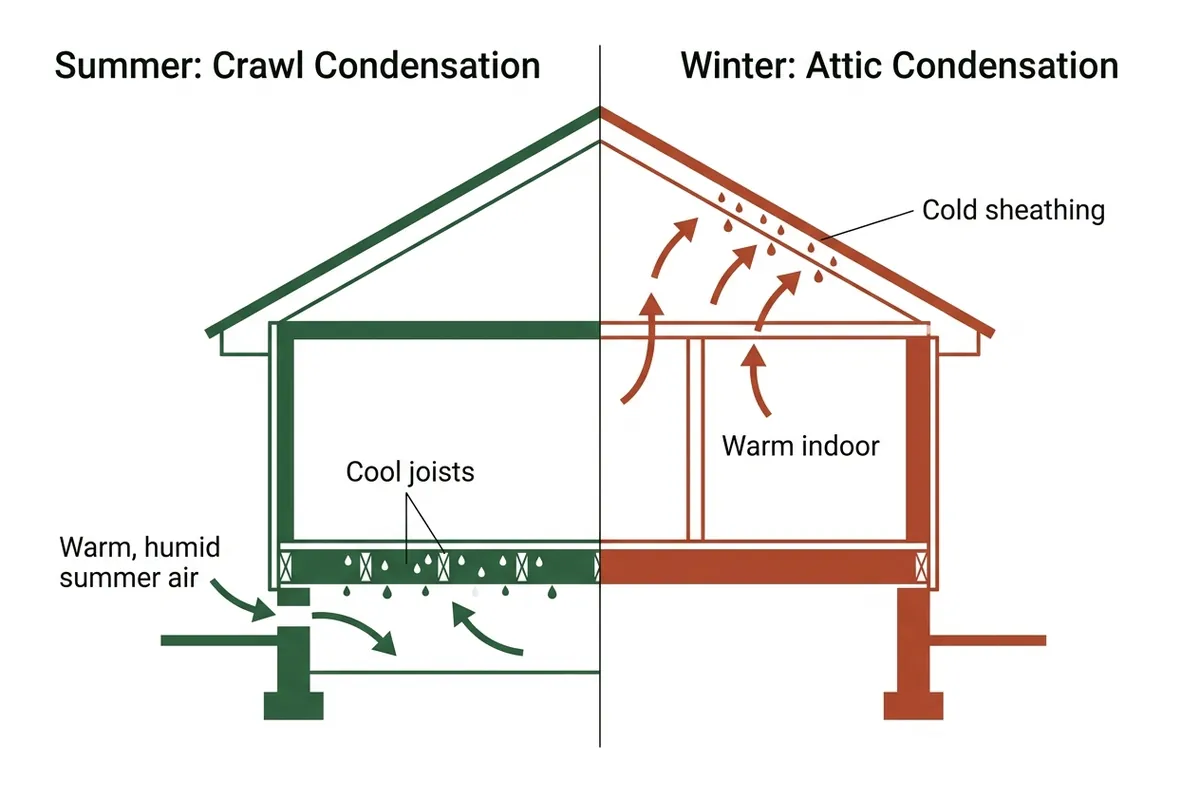
That single fact explains most of what Huntsville homeowners ask about. A musty hallway is usually a wet crawl space breathing upward. Staining behind a closet wall is usually water that pooled outside that wall. Even the AC system growing mold is often just the return duct drawing air from a damp crawl. Find the water and you have found the job.
What gets done about it
| What you notice | The usual culprit | The fix | Huntsville price |
|---|---|---|---|
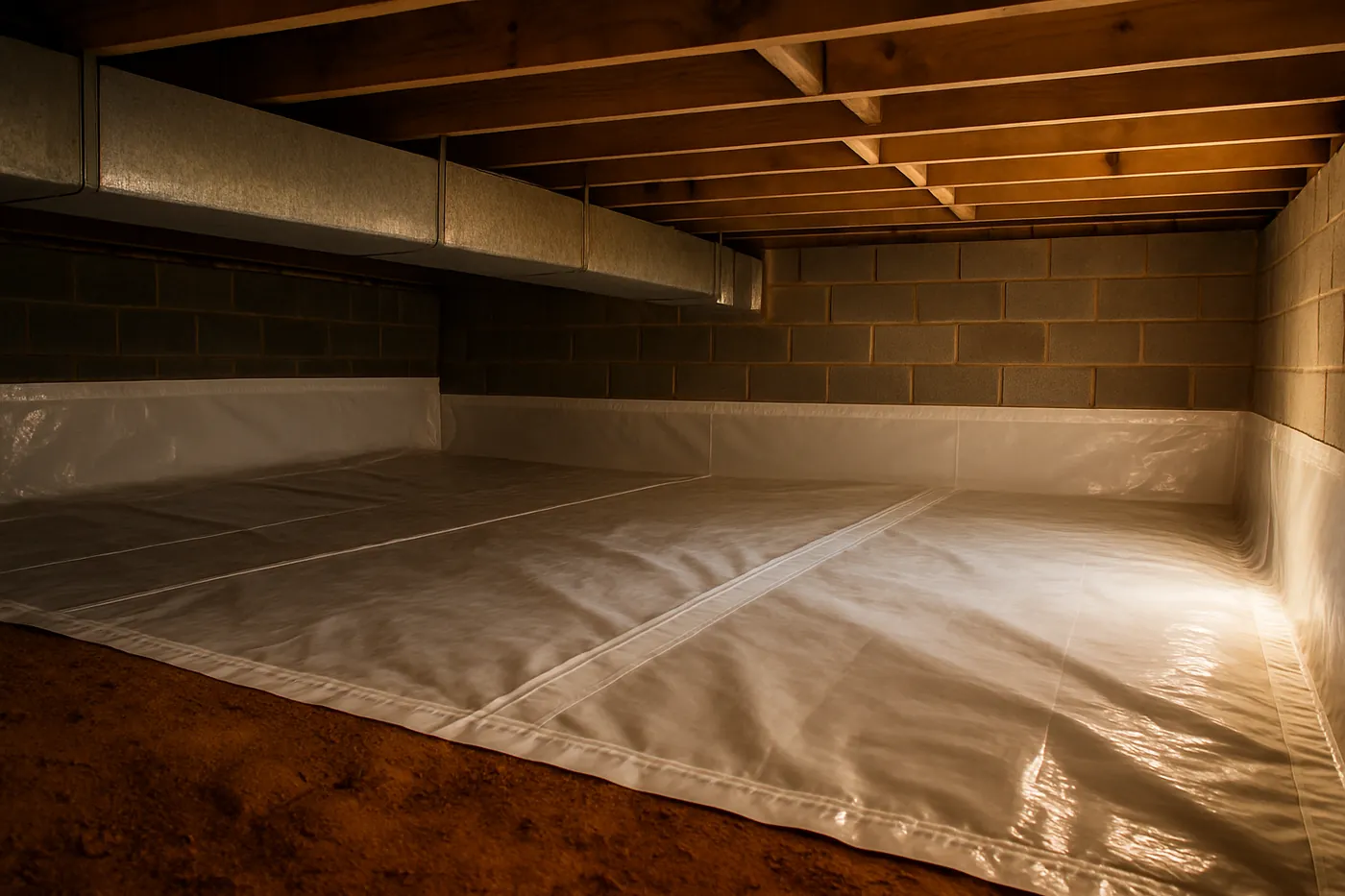
| Earthy odor you mostly smell low, near the baseboards | Uncovered red clay under the floor holding rainwater | Crawl space cleanup with a liner and drainage | $2,500–$9,000 |
| Spotting or fuzz on drywall or a ceiling | A pipe or roof leak, or runoff puddling against that wall | Walled-off work zone and HEPA cleanup | $1,500–$6,000 |
| Darkened plywood under the roof | A bathroom fan exhausting into the attic, or a roof leak | Plywood cleanup and closing ceiling leaks | $1,500–$5,000 |
| Stale smell from the vents in cooling season | A dripping coil, a stopped-up drain line, a return that leaks | Cleaning the coil, pan and ducts | $1,000–$4,000 |
| An odor you cannot locate | Unclear until a meter is used | Inspection, then testing if it is needed | Often free–$900 |
| A split pipe, a failed appliance, a thunderstorm through the roof | Lots of water, and 24–48 hours before mold | Water removal and drying tracked by meter | $1,000–$8,000 |
The Huntsville cost guide explains each of those figures and what raises or lowers them, and it is frank about the houses where a few hundred dollars of gutter and grading work is the whole answer.
Alabama licenses nobody for this, so vet harder
Read this before hiring any company, the specialist we connect you with among them. The Alabama Department of Public Health states there are no Alabama laws concerning mold standards or testing, and no accreditation or certification for contractors performing mold work. For homes, the one state credential that comes into play is the home builder license the Alabama Home Builders Licensure Board requires on residential jobs over $10,000. Nobody in Montgomery licenses mold work, sets a cleanup protocol, or reviews the result.
So it falls to the homeowner to check, and three questions handle most of that. Which written standard governs the job? The trade's document is IICRC S520; a firm with no answer is winging it. Where are the moisture readings that support the scope? No numbers means a price, not a diagnosis. Does the scope name the water source and put a price on stopping it? On clay this tight, a cleanup that ignores the water is just the first of many visits. Put all three to the local specialist too; a capable one will welcome them.
A relocation market, and what that means for buyers
With Redstone Arsenal and the aerospace employers bringing families in on short timelines, many Huntsville buyers make an offer after two walk-throughs. When a home inspector notes staining, find out what is causing it before you settle for a repair credit, since one stain can be a $400 downspout extension or a $9,000 crawl space. An hour-long inspection tells the two apart, and its written scope goes straight into your negotiation.
How the inspection works
Callers worried about one bedroom are often surprised that it begins in the yard. On clay, the outside comes first: where each downspout empties, which way the ground falls, where the most recent thunderstorm left puddles. Under the house, the specialist uses a meter and a flashlight to check wood moisture in joists and subfloor, crawl space humidity against indoor humidity, the condition of the soil and any liner, and any standing water and where it enters. Up top, the attic plywood, damp insulation, where the bath fans end, and whether the soffits breathe. Your problem rooms come last. Before signing, ask for photos, readings tied to named spots, and an itemized written scope that identifies the moisture source. Many local specialists don't charge for the inspection; ask when they call.
Three subjects get fuller treatment elsewhere on the site: what a dark color does and does not mean for black mold, how the AC system and ductwork can push growth into every room, and what insurance actually covers after a sudden water loss.
Mold questions Huntsville homeowners ask
How much does mold removal cost in Huntsville?
Around Huntsville, ordinary remediation falls between $1,500 to $6,000. Crawl spaces that need a sealed barrier and drainage come in at $2,500 to $9,000, attics at $1,500 to $5,000, and HVAC cleanup at $1,000 to $4,000. If the whole home or its structure is involved, plan on $6,000 to $15,000. Many local specialists don't charge for the inspection; ask when they call.
Why is mold so common in Huntsville homes?
Mostly because the soil will not drain. The red Tennessee Valley clay here soaks up less than an inch of water an hour, while Huntsville gets 54.3 inches of precipitation a year, a lot of it in summer thunderstorms that fall faster than the clay can take it. Water the soil won't absorb ends up against foundations and under floors, where humidity keeps it.
Does Alabama license mold removal companies?
Alabama doesn't license mold removal companies. The Alabama Department of Public Health states there are no Alabama laws on mold standards or testing and no accreditation or certification for mold contractors. A home builder license from the Alabama Home Builders Licensure Board is required for residential work over $10,000. With no state gatekeeper, ask each company to name the written standard it uses; IICRC S520 is the trade's standard.
Is the first visit free?
Many local specialists don't charge for the first visit, but it depends on the company. Ask when the specialist calls, before they come out. Expect the visit to cover the crawl space and the attic, take moisture readings at specific points, and check how water moves around the outside; some wrap up with 'run the downspouts out farther, cover the clay, finished.' If work is needed, get an itemized price in writing before you agree to it.
How fast can a specialist get here?
The specialist rings you back to agree on a visit; how quickly depends on how booked they are. If water is coming in right now, call (256) 445-8194. After a leak, mold can start within a day or two, so call any time.
I'm buying a house here. Can it be checked before closing?
Yes, and say when you close as soon as the specialist calls. Relocations tied to Redstone and the aerospace firms keep houses changing hands, so many buyers here close on a home they have never spent a night in. One hour before closing buys more negotiating leverage than anything you can do after.
Mold removal across the Tennessee Valley
MadisonMeridianvilleHazel GreenHarvestNew MarketOwens Cross RoadsHampton CoveAthensDecatur all service areas
Get a Huntsville mold inspection
Tell us what you’re seeing. A musty smell that gets stronger near the floor, growth on drywall or joists, a crawl space that never dries out, water standing beside the slab after a storm, and we’ll pass it to one independent local specialist who can bring a moisture meter to the places that actually explain it. Buying a house? Say so, and mention your closing date.