Madison mold removal typically costs $1,500–$6,000, and crawl space jobs that add a sealed vapor barrier and drainage run $2,500–$9,000. With most of the city built since 2000, a lot of that work corrects grading and builder-grade plastic rather than old rot.
New houses, old ground
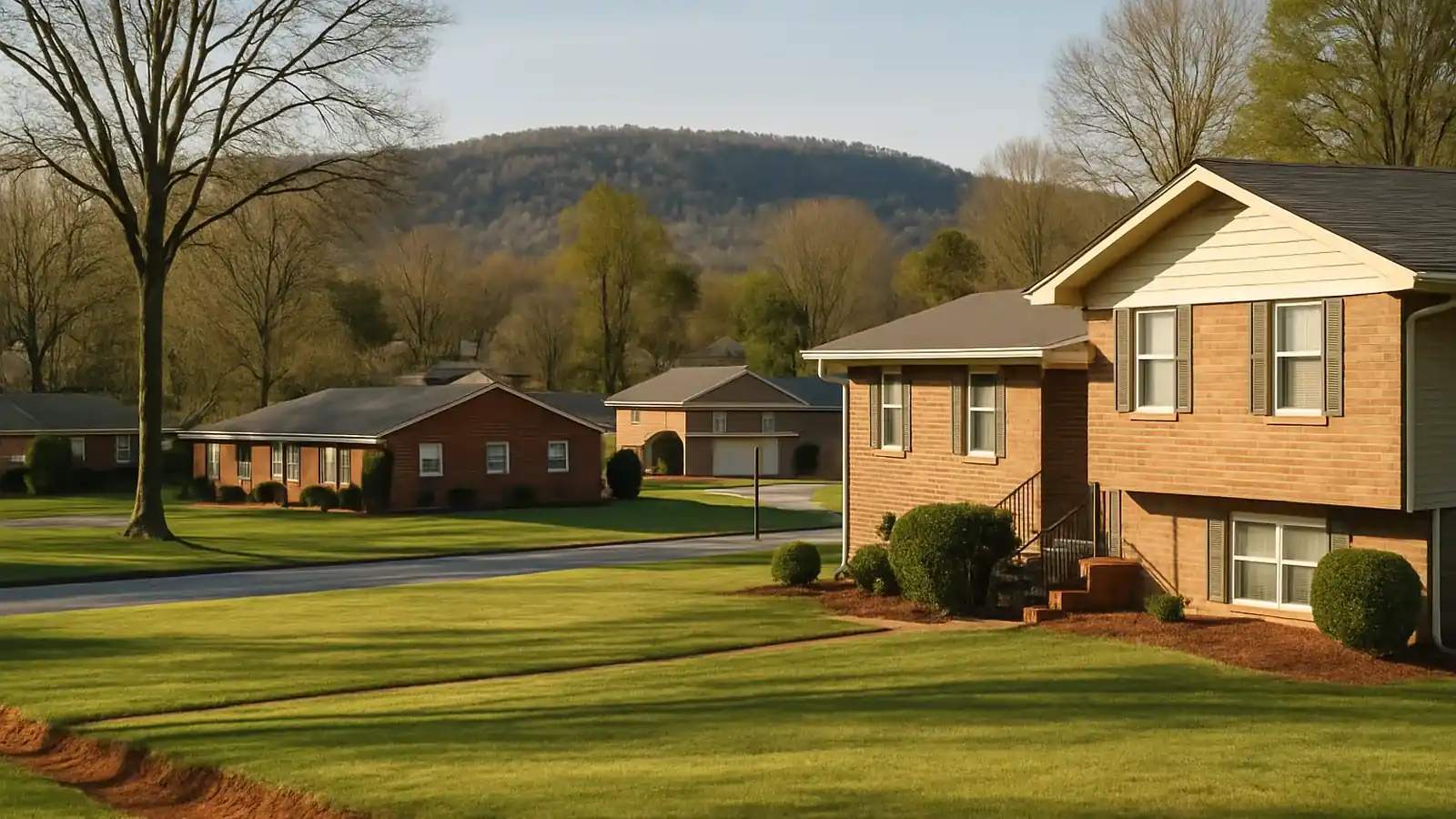
Madison has absorbed an enormous share of the region’s growth, and most of it arrived as new subdivisions on land that was farm ground within living memory. New construction carries an assumption that catches people out: a house built last year sits on the same slow-draining red clay as a house built in 1965, and grading done during construction is the only thing standing between that clay and the foundation.
The failure seen most in Madison is not old-house decay. It is settled grade. Backfill compacts over the first few years, the slope that carried water away at closing quietly reverses, and by year four the downspout is discharging into a low spot beside the slab. Nothing about the house is defective. The dirt just moved.
Builder-era crawl spaces and slab edges
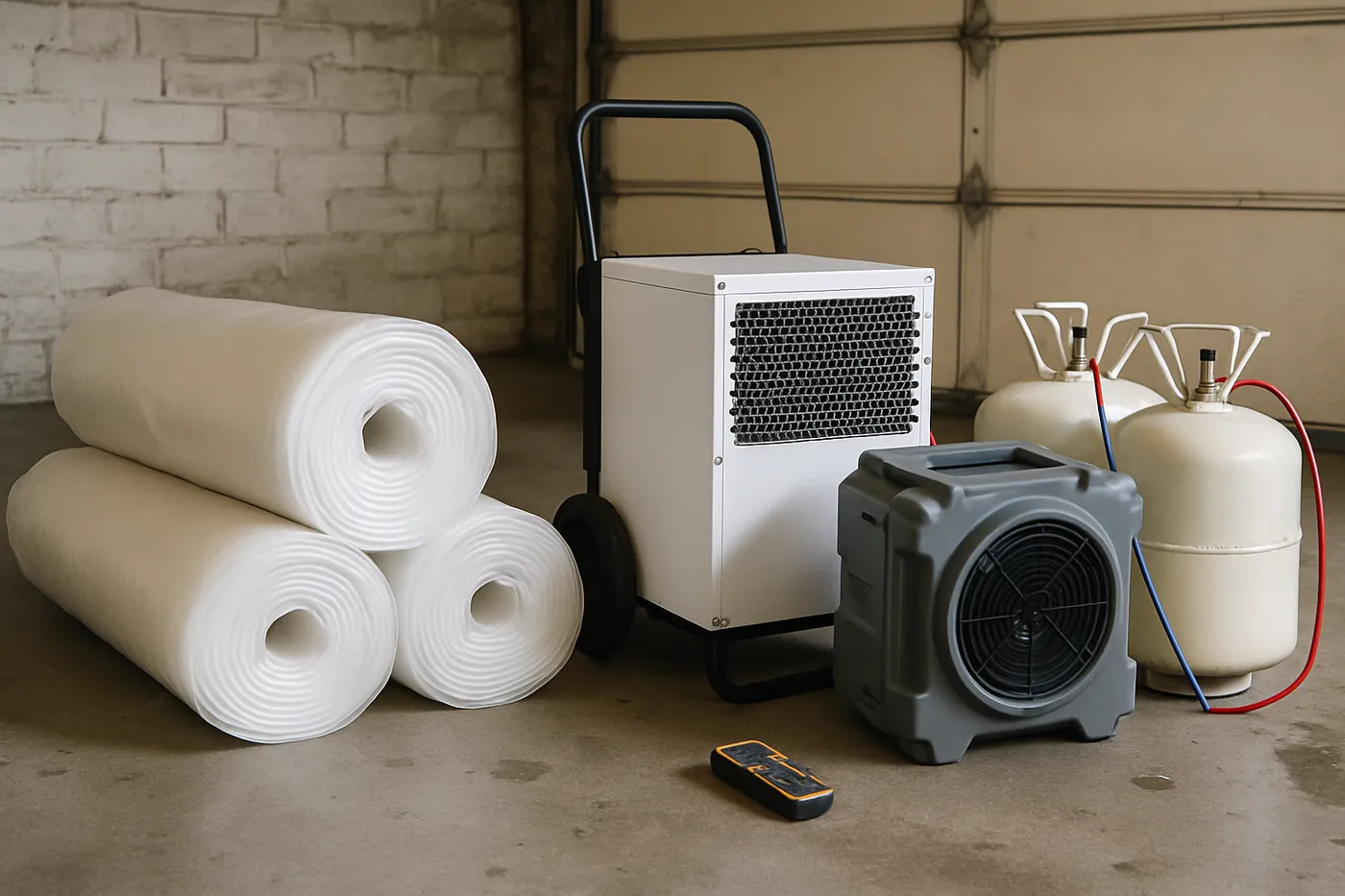
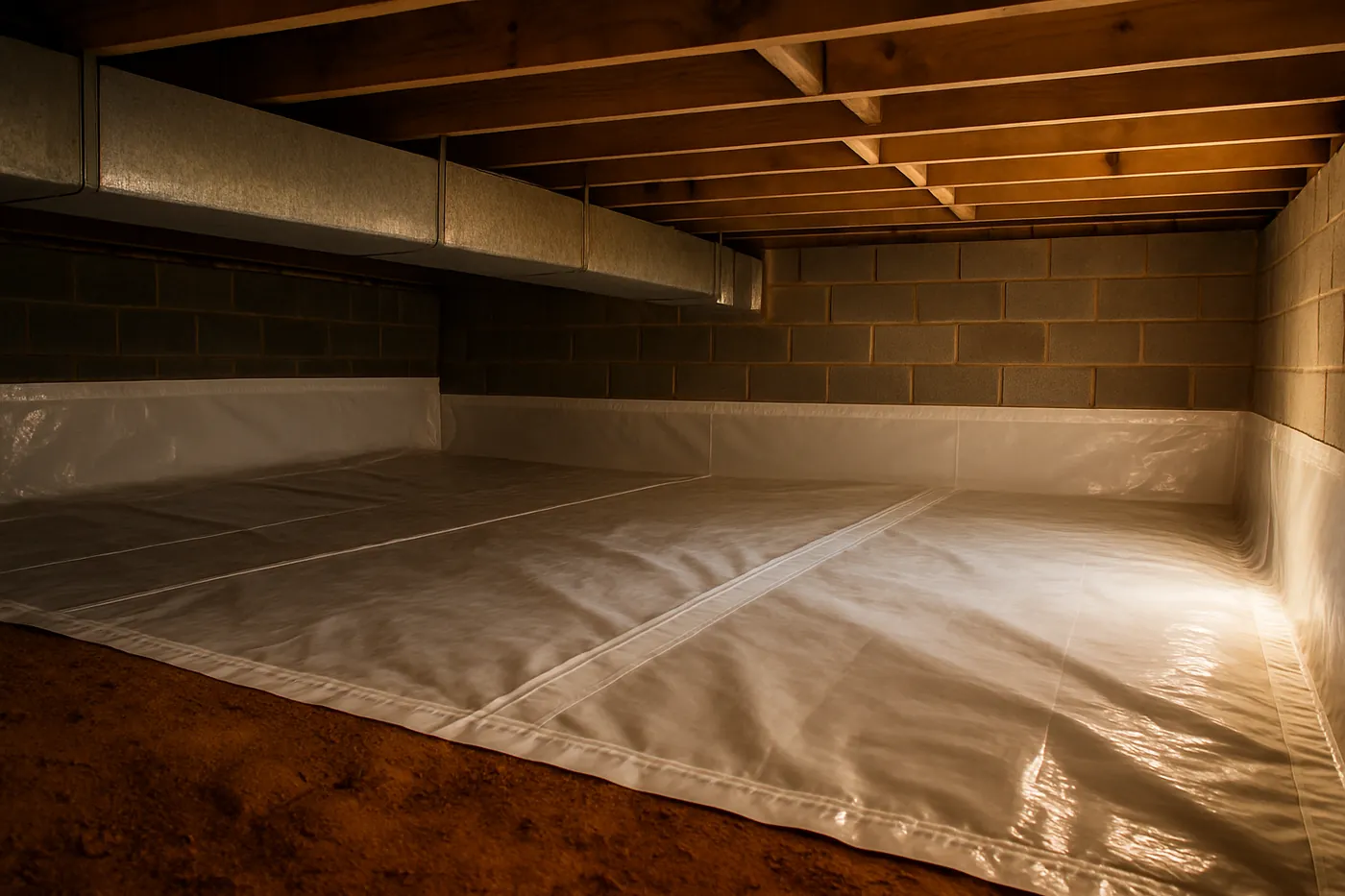
Madison’s stock splits between slab-on-grade and crawl construction, and the two fail differently. Slab homes show it at the perimeter: damp baseboards on one wall, a musty closet on the side the water pools against. Crawl homes show it underneath, where a builder-grade vapor barrier laid loose over clay has been walked on by every trade since. Much crawl space work in Madison is frequently just doing properly what was done cheaply.
Asked in Madison
Why does a new Madison house have a mold problem?
Almost always grade, not construction. Backfill around a new foundation compacts over the first few years, and the slope that drained correctly at closing can reverse by year four. Add clay that passes less than an inch of water an hour and a downspout discharging into that new low spot, and a five-year-old house has a wet crawl space.
Is the builder still responsible?
Sometimes, and it is worth checking your warranty before you call anyone. Alabama builder warranties commonly cover grading and drainage for a limited period. A written scope that documents the water path with photos is the same evidence a warranty claim needs, so ask for one either way.
How much does mold removal cost in Madison?
Most Madison jobs run $1,500-$6,000, and a large share of them are crawl space work in the $2,500-$9,000 range because the correction includes a sealed barrier and drainage. A good inspection includes crawl entry; many local specialists don't charge for it, so ask when they call.
Madison by the numbers
About 23,300 homes stand in the city of Madison by the Census Bureau's 2020-2024 estimate. Roughly 53 percent date from 2000 or later, the 2000s alone account for about 27 percent, and around 6 percent are from 2020 on. Only about 11 percent predate 1980. That is the settled-grade story in numbers: thousands of houses old enough for their backfill to have compacted and young enough that owners still assume the ground is fine.
Bradford Creek, Mill Creek and the ditches
FEMA's detailed flood study in Madison follows Bradford Creek, the Bradford-Sullivan Ditch, Mill Creek and a tributary of Betts Spring Branch, and Zone AE areas, some carrying floodway, are mapped inside a mile or two of Madison’s center. Both Bradford Creek and Mill Creek have USGS gauge sites at Madison. Subdivisions laid out beside those channels can see the water table rise after long rain even when no creek floods.
The city permit form
The City of Madison Building Department at 100 Hughes Road uses one residential permit application for new work, interior alterations and repairs, and the form asks whether the lot is in a flood hazard area. If it is, a flood elevation certificate is required, and the city's engineering and floodplain reviewer signs off. Ask the specialist whether any part of the scope, such as a drain or replaced framing, needs that permit.
Get a Huntsville mold inspection
Tell us what you’re seeing. A musty smell that gets stronger near the floor, growth on drywall or joists, a crawl space that never dries out, water standing beside the slab after a storm, and we’ll pass it to one independent local specialist who can bring a moisture meter to the places that actually explain it. Buying a house? Say so, and mention your closing date.