
HVAC mold removal in Huntsville normally falls between $1,000–$4,000. The money goes to cleaning the coil and drain pan, replacing any flex duct whose lining has grown mold, and fixing the condensate drain that let water sit. Your air conditioner makes water every time it runs, so in a muggy north Alabama July a stopped-up drain line quickly turns into a place where mold thrives.
How mold takes hold in the coil and ducts, which parts clean up and which get swapped, and how to prevent a repeat.
Your AC is a water source
Part of how an AC cools is by condensing water out of the indoor air, and during a sticky Huntsville summer that can add up to several gallons a day. The water should drip into the pan and drain away through the condensate line. It stays instead when slime plugs the line, when the pan rusts or tips the wrong way, or when a unit too large for the house runs in short bursts that never let the coil dry. Fine dust slipping through a bargain filter supplies the food, and the coil becomes the one surface in the home that is always damp and always fed.
What sets this apart is how far it travels. Mold under the floor reaches the rooms gradually as air drifts upward. Mold on the coil or in the return sits in the moving air itself, and each cycle sends it to every room on that system.
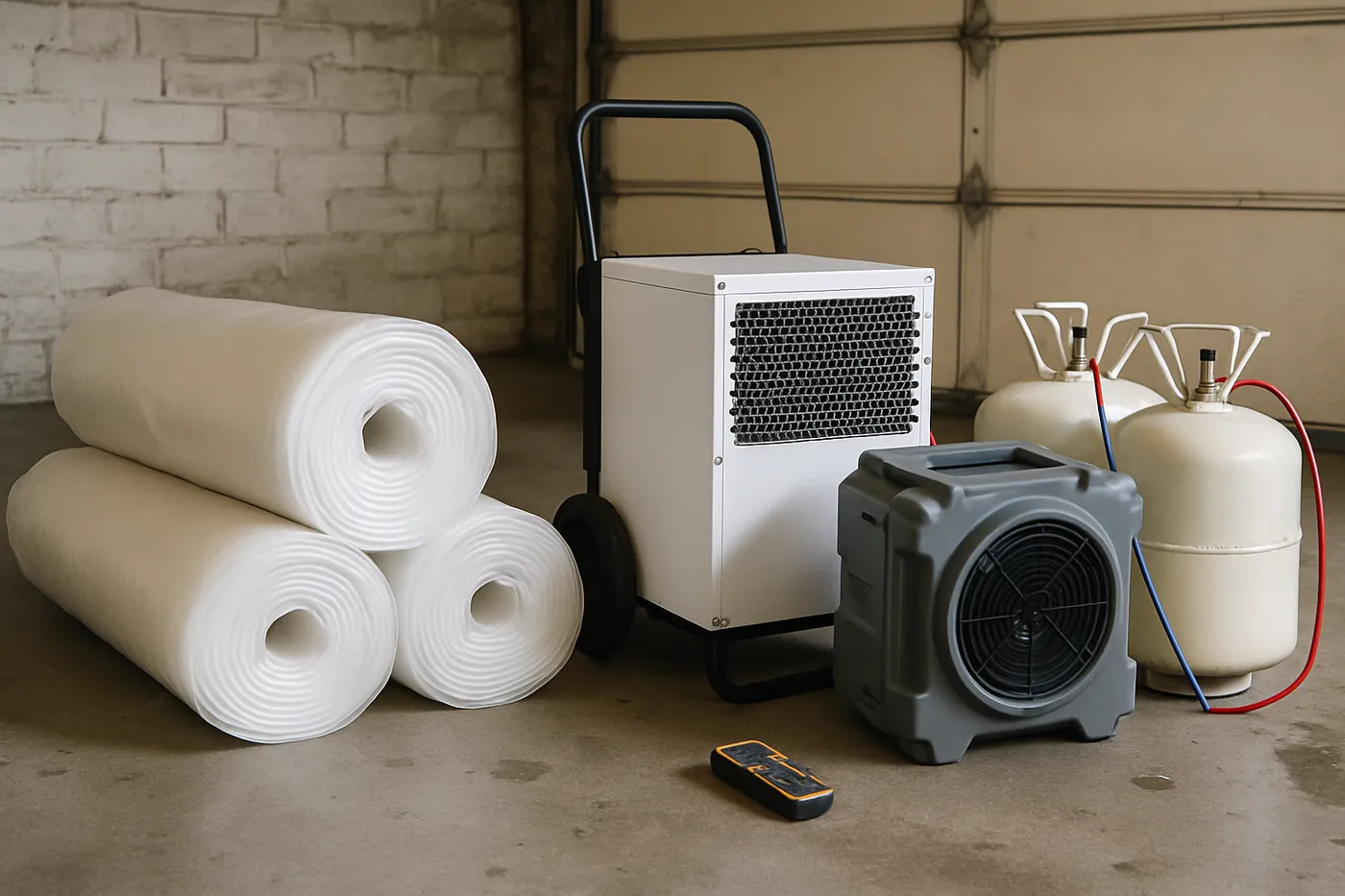
Clean, correct, or replace: by component
| System part | The problem | The usual answer |
|---|---|---|
| Evaporator coil | A slimy film on fins that stay wet | Cleaned where it sits |
| Drain pan & condensate line | Plugged, rusted, or pitched wrong, so water pools | Unclogged, re-sloped, or swapped |
| Sheet-metal ducts | Dust and mold on the inside face | Cleaned out |
| Flex duct with lined interior | Mold grown down into the fiberglass lining | Replaced, since that lining will not come clean |
| Return plenum | Leaky seams pulling in crawl space or attic air | Sealed; frequently the root of it |
The return-air problem specific to this market
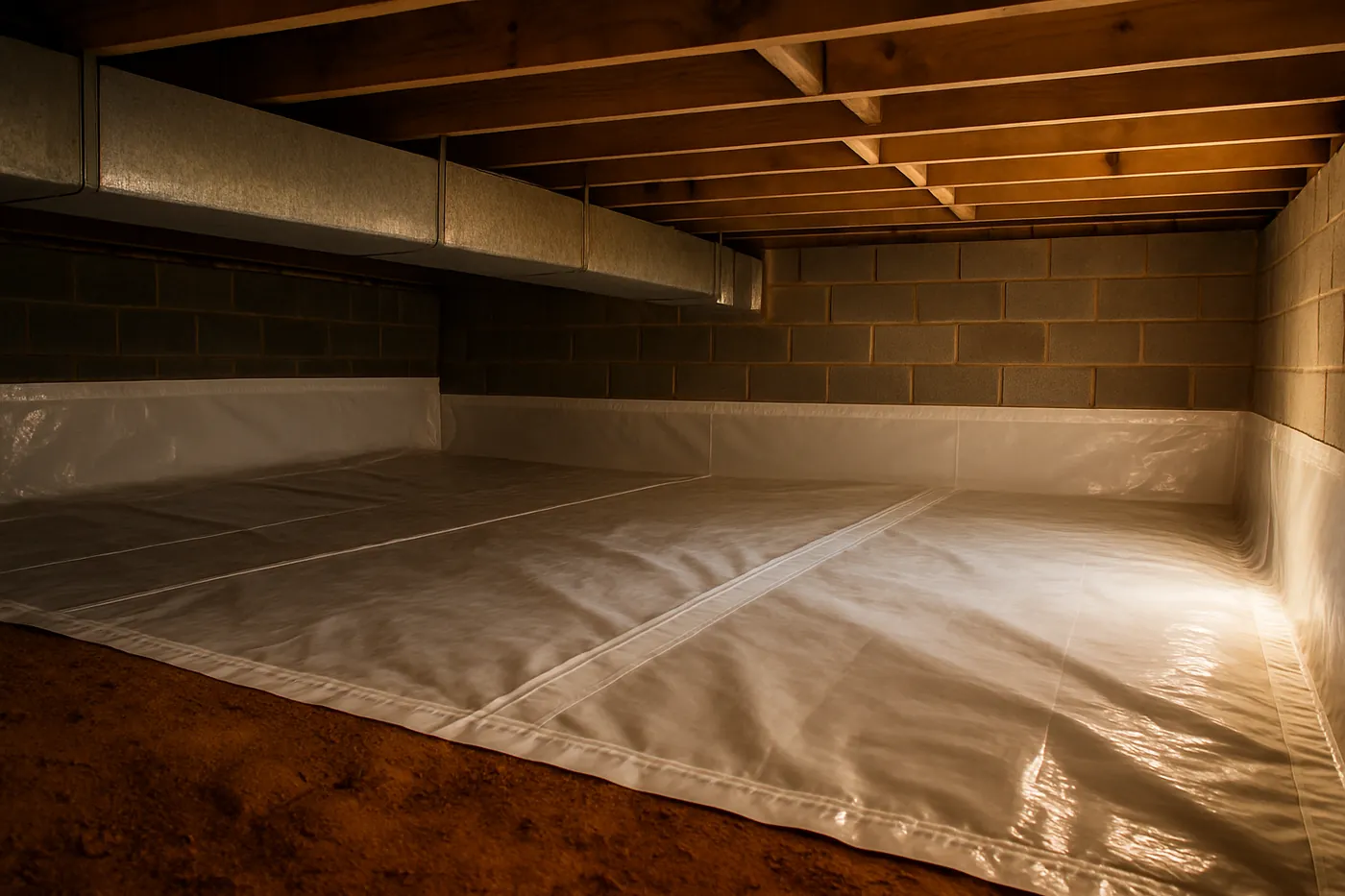
Here is where Huntsville houses give themselves away: an unsealed return plenum or a return duct running through a damp crawl space is not just moving air, it is drawing air, from the crawl, through every gap, into the system, and out into your bedrooms. Systems cleaned spotless can still smell a month later, because the source was never the ductwork; it was the crawl space the return was breathing through. Sealing the return and drying the crawl fixes what duct cleaning alone never will.
Keeping the air path clean afterward
Routine upkeep, not luck, keeps a repaired system clean. Replace the filter as often as the manufacturer specifies, with the kind the unit was designed to use; one that is too restrictive cuts airflow and makes the coil sweat, which is exactly what you just paid to stop. Every spring and fall, remove the access panel and check the coil and pan, because a puddle or a sluggish drain is your first warning. Keep the condensate line flowing, leave the fan on auto instead of on so the coil dries between runs, and if the musty odor ever returns, have someone test the return for leaks. Costs for every class of work are in the cost guide.
HVAC mold questions, straight answers
How does mold get into an AC system?
Through the water the unit itself produces. As the coil cools the air it condenses moisture, which should collect in the pan and run off through the condensate line. A plugged line or a badly sloped pan leaves that water sitting in a warm, dark spot beside whatever dust got past the filter, and on a Huntsville summer day that setup grows mold for hours at a stretch.
Is the musty smell when the AC starts actually mold?
Frequently, and when it happens tells you a lot. An odor that hits in the first few seconds of a cycle and then fades is air crossing a damp coil or passing through a moldy return. A smell that is constant regardless of the system usually points elsewhere - a crawl space, most commonly in this market.
Can ductwork be cleaned, or does it have to be replaced?
Metal ductwork cleans up fine. Flex duct with a moldy inner lining is normally replaced, because the lining tears before it comes clean. If a company wants to replace every duct in the house before it has even looked at the coil and pan, it is selling a bundle rather than diagnosing anything.
Are the chemical treatments and sanitizers worth paying for?
Only after the growth has been physically removed, as a last step, and never in place of removal. Spraying a dirty coil or fogging a moldy duct just seals the growth under a chemical coat, and the EPA says plainly that biocides do not replace cleaning. Ask what will actually be removed, what will be replaced, and why the chemical is being used.
What does HVAC mold cleanup cost in Huntsville?
Plan on $1,000-$4,000, depending on how much of the system needs attention: a coil and pan cleaning sits near the bottom, replacing part of the ductwork near the top. When the crawl space the ducts pass through is the real source, that job is priced on its own and really ought to be done first.
Get a Huntsville mold inspection
Tell us what you’re seeing. A musty smell that gets stronger near the floor, growth on drywall or joists, a crawl space that never dries out, water standing beside the slab after a storm, and we’ll pass it to one independent local specialist who can bring a moisture meter to the places that actually explain it. Buying a house? Say so, and mention your closing date.